
The most important points in brief
- Perimenopause: This is the often multi-year transition phase before your last period, during which hormone production slowly decreases and the first symptoms may appear.
- Menopause (climacteric): An umbrella term for the entire period of hormonal change, encompassing perimenopause, menopause, and postmenopause.
- Menopause: Refers to the point in time when you have your very last menstrual period. By definition, this point is reached when menstruation has ceased for 12 consecutive months.
- Typical symptoms: In addition to hot flashes and sleep disturbances, changes in skin and hair are also common, such as thinning hair, loss of eyelashes and eyebrows.
- Average age: Perimenopause usually begins in the mid-40s, while menopause in Germany occurs on average at 51 years of age.
- Self-care: An adapted care and daily routine can help increase your well-being and positively accompany visible changes.
Menopause is more than just hot flashes. It marks a profound, natural transition in every woman's life – a time of reorientation that often begins years before the final period. But what exactly do the terms perimenopause, menopause, and climacteric mean? And how can you best deal with the physical changes that you might already be experiencing?
In this guide, we shed light on the subject, explain the individual phases, and show you how you can feel completely comfortable in this new phase of life and support your natural beauty.
What is perimenopause? The phase before menopause.
Think of perimenopause as a preview of menopause itself. This phase can begin as early as your mid-40s and last for several years. Your body begins to slowly reduce its production of the hormone estrogen. These fluctuations are responsible for the first symptoms.
Symptoms are often irregular and can vary greatly from woman to woman. Typical early signs of perimenopause include:
- Irregular cycles (sometimes shorter, sometimes longer)
- Sleep disturbances and night sweats
- Mood swings and increased irritability
- First signs of dry skin
- The feeling that the hair is losing volume
Many women don't immediately realize they're entering perimenopause, as the symptoms often develop gradually. It's a transitional phase where you can learn to listen to your body's new signals.
Menopause (climacteric) at a glance
The term "menopause" or "climacteric" describes the entire process of hormonal change. It is divided into three phases:
- Perimenopause: The transition phase already described.
- Menopause: This is not a period of time, but a single event – the point in time of your last menstrual period. Officially, it is confirmed retrospectively after 12 months without bleeding. The average age for this in Germany is around 51 years .
-
Postmenopause: The phase that begins after the last menstrual period and lasts until the end of life. Hormone levels have settled at a new, lower level, and the body adapts to this state.
Typical symptoms of menopause and what happens in the body
The drop in estrogen levels affects the entire body. While hot flashes and sleep problems are the most well-known symptoms, there are a number of other changes that can influence your well-being and even your appearance.
Physical changes
Hot flashes, sudden sweating, and heart palpitations are among the classic vasomotor symptoms. Sleep disturbances are also widespread, often caused by night sweats. Some women also notice weight gain, joint pain, or vaginal dryness.
Psychological and emotional symptoms
Hormonal fluctuations can have a significant impact on mental health. Many women experience a rollercoaster of emotions, feeling more easily stressed, irritable, or anxious. Difficulty concentrating and general exhaustion are also common.
Effects on skin, hair and eyelashes
Estrogen is crucial for collagen production, skin elasticity, and hair growth. When estrogen levels drop, the consequences are often visible:
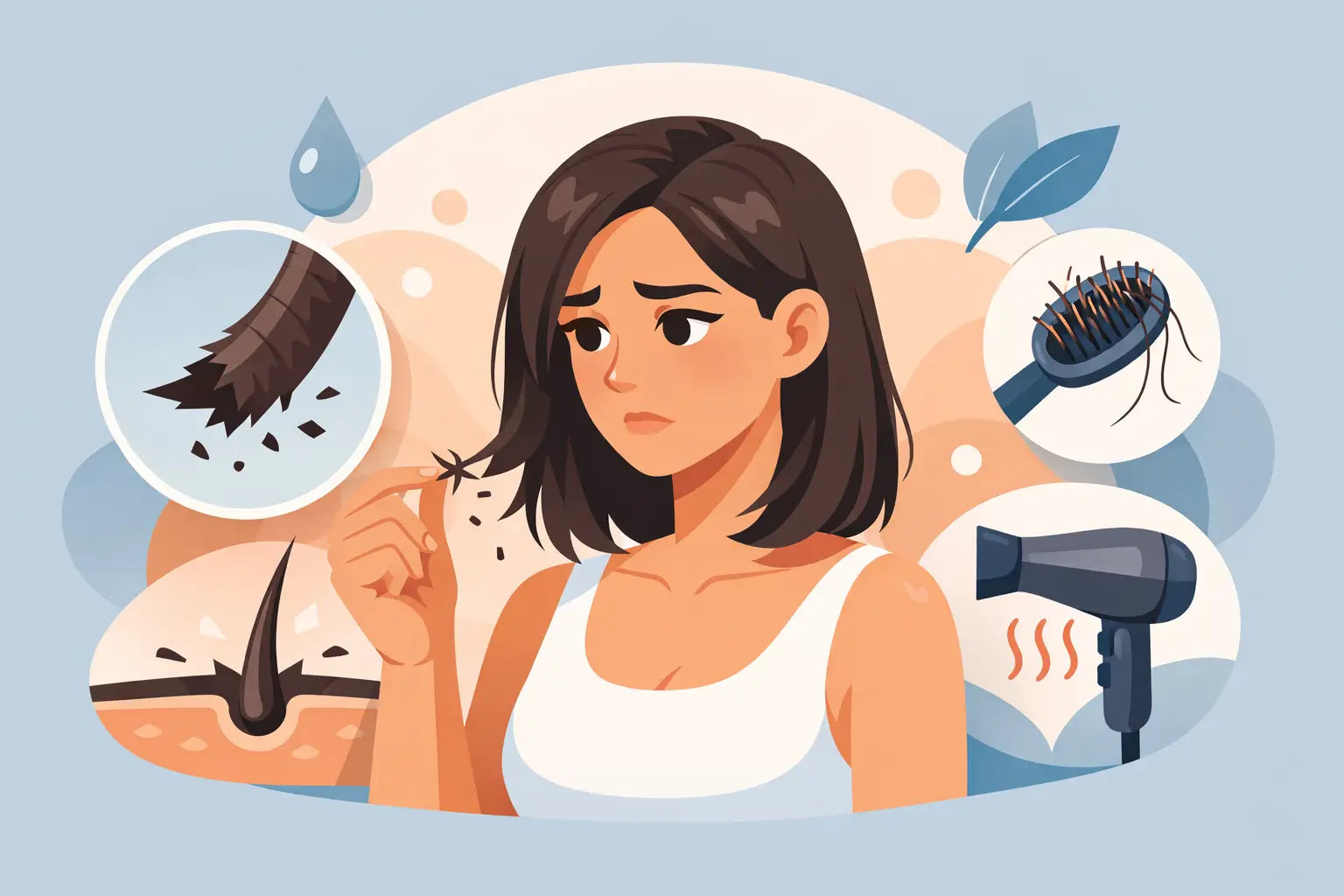
- Thinner scalp hair: The growth phase of the hair shortens, which can lead to diffuse hair loss and lower hair density.
- Dry skin: The skin loses moisture and elasticity, which promotes wrinkles.
- Weaker eyelashes & eyebrows: Just like the hair on your head, eyelashes and eyebrows can also become thinner, fall out, or grow back more slowly.
These visible changes can affect self-confidence. But you can actively do something to specifically support your skin and hair during this phase.
TRU TIP: Strengthen yourself from the inside out
Menopause is the perfect time to rethink your hair care routine. Combine a nutrient-rich diet with targeted external care. The Ultimate Hair Growth Set , consisting of our scalp serum and special vitamin capsules, is designed precisely for this purpose. This way, you support your hair growth in two ways.
Here's how you can actively support your well-being
You are not helplessly at the mercy of change. A conscious lifestyle and the right care strategy can make a big difference. It's about establishing new routines that are good for you and make you feel comfortable in your own skin.
Adjust your beauty routine: Targeted care for hair and eyelashes
If you notice that your hair is losing volume or your eyelashes and eyebrows are becoming thinner, it's time for specialized care that addresses the root cause.
- Scalp care is hair care: A healthy scalp is the foundation for strong hair. An effective scalp serum like our Hair Growth Serum can stimulate the hair roots and extend the growth phase. Regular use is key to success.
- A frame for your eyes: Full lashes and brows give your face expression. Brow serum helps fill in unwanted gaps in your eyebrows. There's also targeted support for lashes that have lost length and density.
- Find the right formula: If your eyes have become more sensitive during menopause, a gentle formula could be ideal. Our Lash Serum Soft is a hormone-free and prostaglandin-free alternative that works with natural boosters like peptides and caffeine.
With over 90,000 satisfied customers and our 3-month results guarantee on many of our serums, you can try these new routines completely risk-free.
Conclusion: A chance for a new beginning
Menopause is a natural and inevitable phase of life, but it doesn't have to be a time of loss. By understanding your body's processes and learning to respond to its new needs, you can navigate this time with confidence and positivity. Whether through lifestyle adjustments, conversations with your doctor, or a targeted skincare routine that helps you feel beautiful and energized, you have the tools to boost your well-being. See it as an invitation to delve deeper into yourself and discover new ways to care for yourself.
Frequently Asked Questions (FAQ)
What is the exact difference between perimenopause and menopause?
Perimenopause is the initial phase of menopause – the transition leading to the final period. The term "menopause" (climacteric) is the umbrella term for the entire process, encompassing perimenopause, menopause (the final period), and postmenopause.
How long does menopause last in total?
The duration varies greatly from woman to woman. Perimenopause alone can last between 4 and 10 years. The typical symptoms of menopause usually subside slowly in the postmenopausal phase, which can also take several years. There is no fixed timetable.
Is it possible to stop hair loss during menopause?
Hormonally induced hair loss often cannot be completely stopped, but it can be significantly reduced. A healthy diet, stress reduction, and the use of topical products such as a hair growth serum can strengthen the hair roots and stimulate growth, making the hair appear fuller and stronger.
Which ingredients in serums are particularly helpful during this phase?
For hair, eyelashes, and eyebrows, active ingredient complexes with peptides, caffeine, biotin, hyaluronic acid, and strengthening vitamins like panthenol are ideal. They help nourish the roots, support the growth phases, and moisturize the hair. You can find more information about the specific ingredients in our FAQs .
List of sources
- Professional Association of Gynecologists (BVF). (n.d.) . Menopause . Retrieved October 29, 2025, from https://www.frauenaerzte-im-netz.de/koerper-sexualitaet/wechseljahre-klimakterium-menopause/


Leave a comment
This site is protected by hCaptcha and the hCaptcha Privacy Policy and Terms of Service apply.